

Connecting the dots
October 11, 2026
Why builders and companies need more chances to meet, and what we should measure when they do.
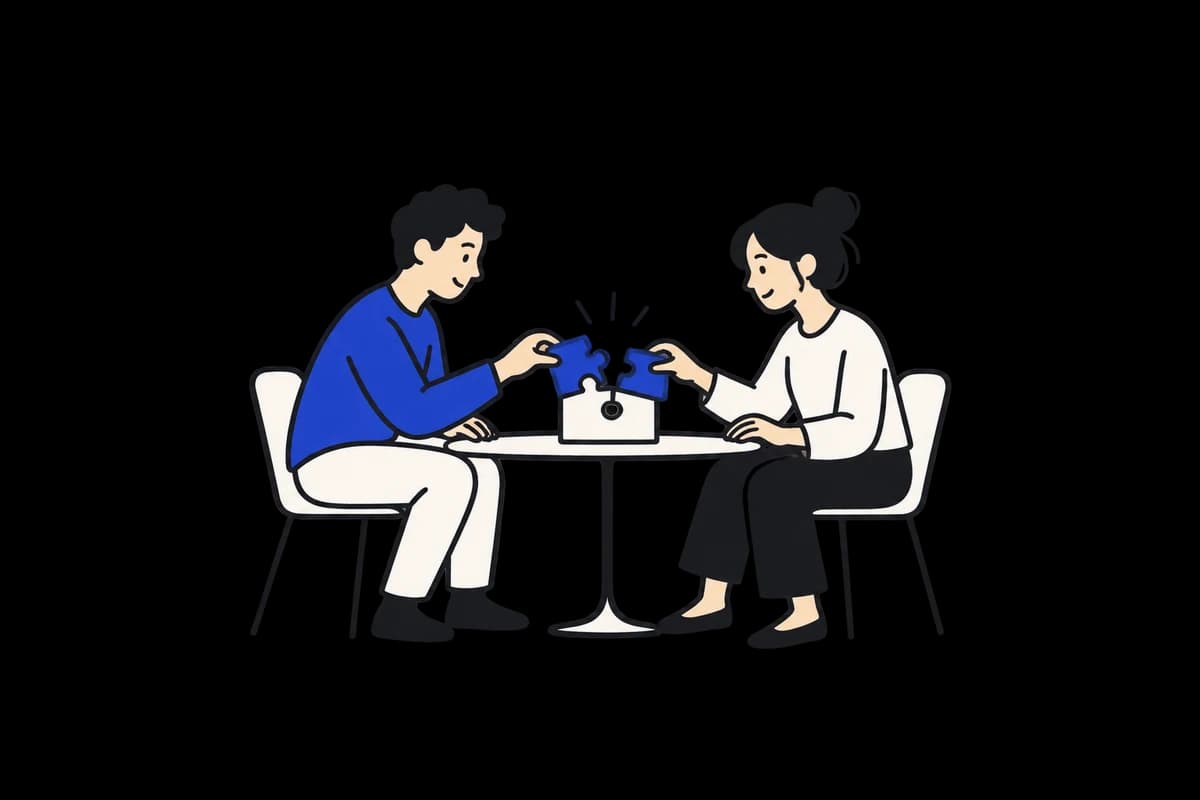

A company has a tool. A builder has an idea. Someone else has a problem neither of them has heard about yet.
Put them in the same room and the conversation changes. A demo meets a question from someone who might actually use it. The people making technology get closer to the people living with it.
That is why we build Arandano.
A bigger network is only the beginning
The ITU estimated that 6 billion people were online in 2025, about 74% of the world's population. That still left more than a quarter offline. Access, affordability and skills shape who can use what we build.
The scale of software creation is growing too. GitHub's 2025 Octoverse report reported more than 180 million developers on its platform. That is a platform count, not a census of every developer worldwide.
More tools and more people do not automatically make useful products. Builders need ways to hear about problems beyond their own experience. Companies need ways to learn what happens when someone tries their technology for the first time.
Meet outside your usual circle
A randomized LinkedIn study followed roughly 20 million users over five years. The experiments found that weaker ties could increase job transmission, with diminishing returns as connections became too weak. MIT's explanation makes the important distinction: the relationship was not simply "the weaker, the better."
This was research on an online professional network. It does not predict the impact of a hackathon. Our takeaway is to make it easier for people outside their usual circle to work on something together.
Give the conversation a real task
A workshop gives people a tool to try. A hackathon gives them a deadline and a shared problem. A meetup gives them room to ask a question.
For a company, that can reveal a confusing integration or an unexpected use case. For a builder, it can mean a collaborator or a first user. A useful next step is to watch someone attempt a task, rather than asking whether they like the idea. The GOV.UK usability-testing guide explains how.
We want those exchanges to happen across Latin America. Our calendar turns that intention into a place and a date.
Count what continues
Registrations show interest. Attendance shows whether people came. To learn more, we want to track working projects, conversations with potential users, and projects still active after 30 days.
These are proposed measures for future Arandano events. We should report the denominator and follow-up response rate with every percentage. The NSF I-Corps report is useful further reading on a program that treats learning about customers as part of developing technology.
Read more
- ITU, Facts and Figures 2025. Global connectivity data, including the gaps that access alone does not solve.
- GitHub, Octoverse 2025. A view of developer activity and growth on one major platform.
- Rajkumar and colleagues, A causal test of the strength of weak ties, 2022. The research behind the professional-network finding.
- MIT, The power of weak ties in gaining new employment, 2022. An accessible explanation of the experiment and its limits.
- GOV.UK, Using moderated usability testing. A practical way to observe people using a prototype.
- NSF, I-Corps 2025 biennial report. How a research-commercialization program reports participation and outcomes.
About the authors


Shiara Arauzo
Design engineer, product designer, and Cursor Ambassador. Shiara brings care for craft and people to the communities and hackathons she builds.


Anthony Cueva
Software builder and community organizer. Anthony makes products, shares how he builds them, and creates spaces for other builders to ship together.