

A community people return to
October 11, 2026
Shared interests bring people in. The way we treat one another gives them a reason to stay.
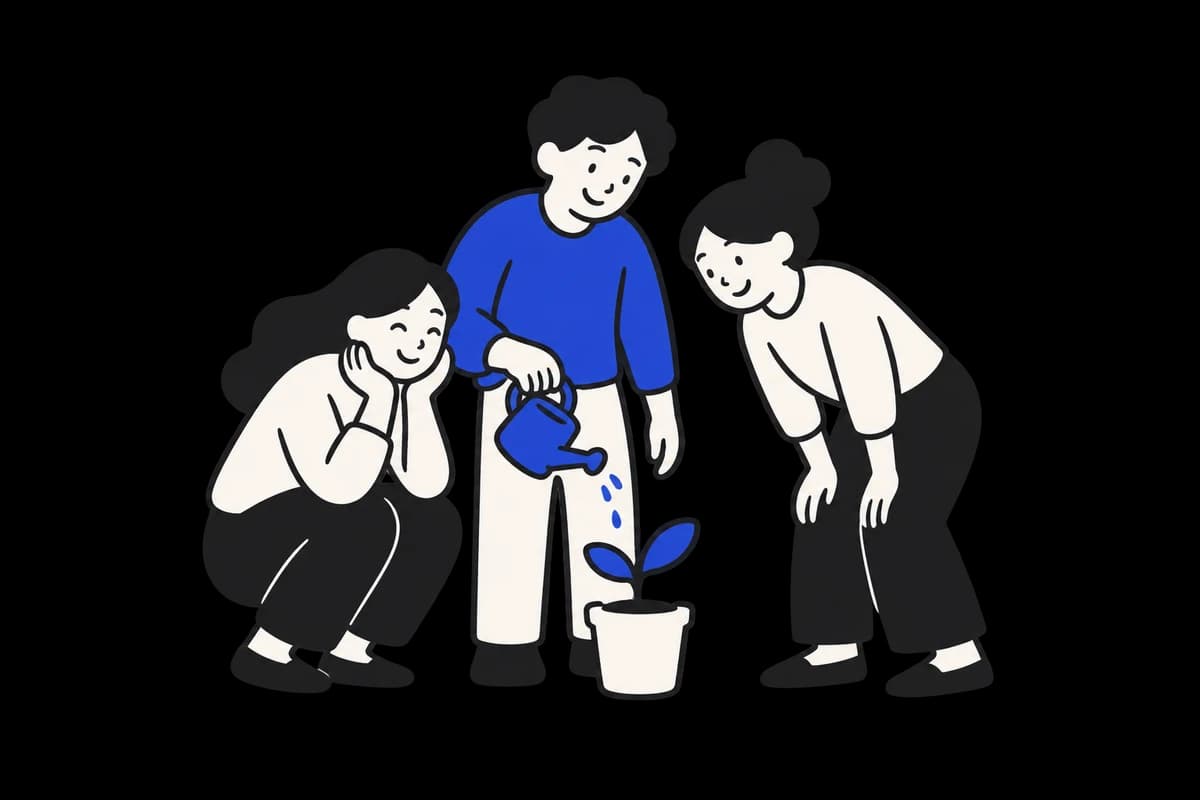
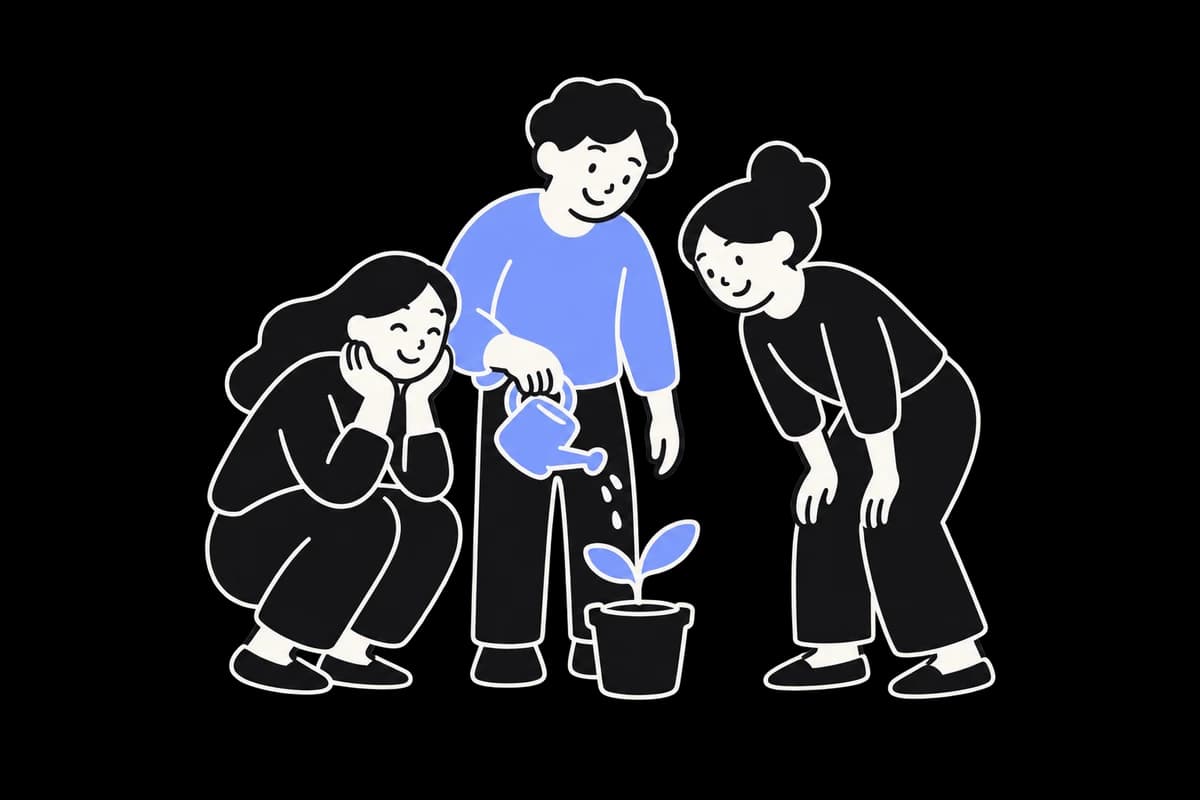
A community starts with something people care about together. It grows when they can take part, ask for help and contribute something of their own.
For a builder, that might be a room where unfinished work is welcome. You bring a prototype, someone asks a useful question, and next time you have a reason to return.
Connection needs more than a headcount
The WHO's 2025 estimates put loneliness at roughly 1 in 6 people worldwide, or 15.8%. WHO distinguishes the number of relationships from the support they provide and the quality of the interactions.
A tech gathering is not a treatment for loneliness. But that distinction is useful for organizers: being surrounded by people and feeling able to participate are different experiences.
A newcomer should not need to decode the room. Explain whether they can come alone, how to find a team, and who can answer a basic question. Let them see someone else's rough first attempt.
Make asking for help ordinary
Amy Edmondson's study of 51 work teams found an association between psychological safety and learning behavior. It studied teams in one manufacturing company, not tech communities everywhere. The useful idea is that learning depends partly on whether people feel able to speak up.
At a gathering, organizers help set that expectation. Admit when you do not know an answer. Introduce mentors by what they can help with. Respond to a beginner's question with the same patience you give an experienced builder.
Leave room for members to shape it
An organizer cannot be part of every conversation. Members need ways to help each other without waiting for permission.
Wenger-Trayner's introduction to communities of practice describes three connected elements: a shared domain, a community, and a practice. A group becomes useful through what its members learn to do together.
That can be as small as sharing a fix, reviewing a project, or writing down an answer so the next person does not have to ask again. GitHub's guide to welcoming communities gives concrete examples of making that first contribution easier.
Measure the reason to return
Alongside attendance, I want to know who comes back, who receives help, and who contributes. Those are future reporting questions for Arandano, not figures we have already collected.
A return rate needs a defined group and time period. Contribution counts need a shared definition. A conversation with someone who stopped attending may explain more than a rising follower count.
The next gathering is on our calendar. I want it to be a place people can help shape.
Read more
- WHO, Social connection, 2025. Global estimates and a clear distinction between isolation, loneliness and connection.
- Edmondson, Psychological Safety and Learning Behavior in Work Teams, 1999. Research on speaking up and learning together.
- Wenger-Trayner, A brief introduction to communities of practice, 2015. A framework for shared learning beyond an audience or mailing list.
- GitHub Open Source Guides, Building welcoming communities. Practical advice on newcomers, documentation and participation.
- GitHub Open Source Guides, Open source metrics. Ways to choose measures that reflect what your community is trying to achieve.
- Woolley and colleagues, Evidence for a collective intelligence factor in the performance of human groups, 2010. Research on group performance, social sensitivity and conversational participation.
About the author


Shiara Arauzo
Design engineer, product designer, and Cursor Ambassador. Shiara brings care for craft and people to the communities and hackathons she builds.